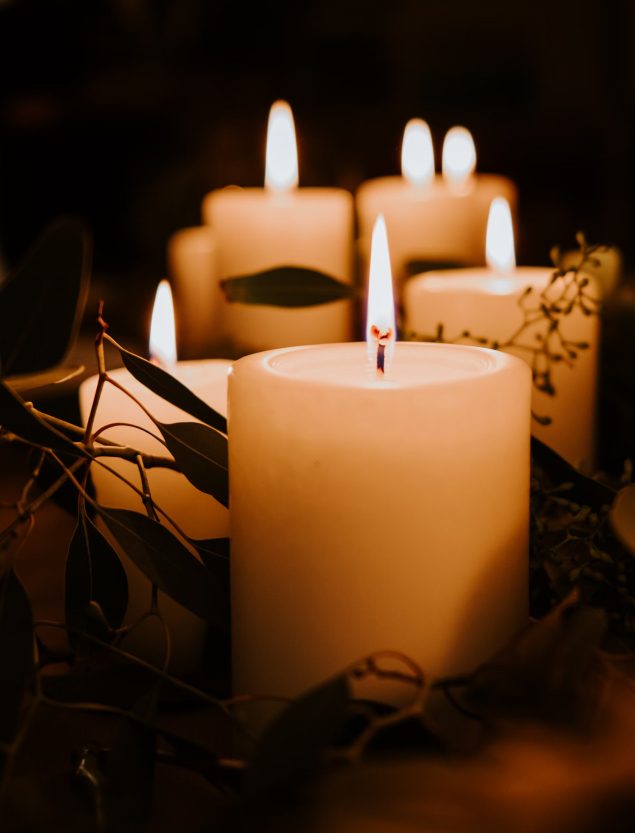
A scented candle does not smell the same way from the moment you light it to the moment you blow it out. The fragrance shifts, opens, and settles as the wax heats and the oils release at different temperatures. These layers are called notes, and understanding them changes how you choose candles and how you experience them.
Fragrance notes function like a small orchestra. Each instrument plays its part, but the melody you hear depends on which section is leading at any given moment. The structure follows a pyramid with three distinct levels: top, middle, and base.
The Top Notes Greet You First
The top notes are the introduction. They are light, fresh, and volatile, meaning they evaporate quickly. When you hold a candle jar to your nose in a shop or open the box at home, the top notes hit you first. They create the initial impression and convince you to take the candle home.
Common top notes include citrus scents like lemon and bergamot, light fruits such as berries, or fresh herbs like eucalyptus and mint. These notes are designed to catch your attention, but they do not last. Within minutes of lighting the candle, they begin to fade, making way for the heart of the fragrance.
The Middle Notes Form the Heart
Once the top notes settle, the middle notes emerge. These are the soul of the candle, the character that defines the fragrance from the first half hour through the bulk of the burn. Middle notes are warmer and more rounded than their lighter counterparts. They provide fullness and body.
Floral scents like lavender, rose, and jasmine live here. Spices such as cinnamon and clove also fall into this category, along with softer herbs like chamomile. When someone describes a candle as floral or spicy, they are usually talking about the middle notes. These notes linger for hours, creating a consistent presence that fills a room.
The Base Notes Anchor Everything
Base notes are the foundation. They are heavy, rich, and slow to evaporate. You notice them most after the candle has been burning for an hour or when you walk into a room where a candle has finished burning earlier. They provide depth and staying power.
Common base notes include woods like cedar and sandalwood, resins such as amber and frankincense, and sweet elements like vanilla, musk, or patchouli. These notes cling to the wax and continue releasing even after the flame is gone. A candle with weak base notes will feel thin and disappear the moment you extinguish it.
Why Layers Matter When You Buy
When you choose a candle, consider how the notes work together. A candle that smells sharp and bright in the jar may reveal nothing but sweetness once lit if the middle notes are underdeveloped. A candle that seems heavy and dark at first may open into something balanced and complex as the top notes burn away.
Quality candles balance all three levels. The top invites you in, the middle keeps you company, and the base lingers like a memory. That balance separates a candle you enjoy once from one you return to again and again.
At Dee’s Scents From Heaven, every custom blend is crafted with this pyramid in mind. The goal is not just a strong smell, but a journey from the first light to the last.
Subscribe To Our Newsletter
Subscribe for your email and get 10% off your first order!

COPYRIGHT 2024 © Dees Scents From Heaven. ALL RIGHTS RESERVED.
